

Adipogenesis is the differentiation of preadipocytes into mature adipocytes that plays a central role in the development of obesity and related complications. This process is regulated by transcription factors such as peroxisome proliferator-activated receptor gamma (PPARγ) and CCAAT/enhancer-binding proteins (C/EBPs), which regulate adipogenesis and lipid accumulation.
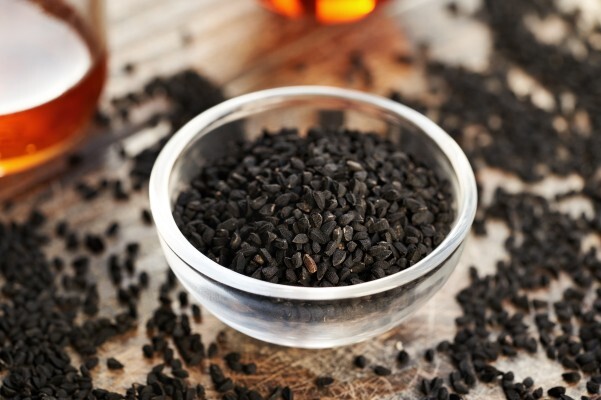
Nigella sativa (black cumin), traditionally used in Unani, Ayurveda, and Tibb systems of medicine, by its active component thymoquinone, has demonstrated antimicrobial, anti-inflammatory, antioxidant, antidiabetic, antihypertensive, antitumor, immunomodulatory, and anti-obesity properties. Although previous studies suggest lipid-lowering benefits and anti-adipogenic potential, the molecular mechanisms underlying these effects remain incompletely understood.
In recent study published in Food and Nutrition Science demonstrated that black cumin seed extract inhibited adipogenesis in the 3T3-L1 cellular model and significantly improved serum lipid parameters in human subjects. An 8-week supplementation with 5 g/day reduced total cholesterol, LDL-C, and triglycerides while increasing HDL-C, without adverse effects on appetite (see graphic for details).
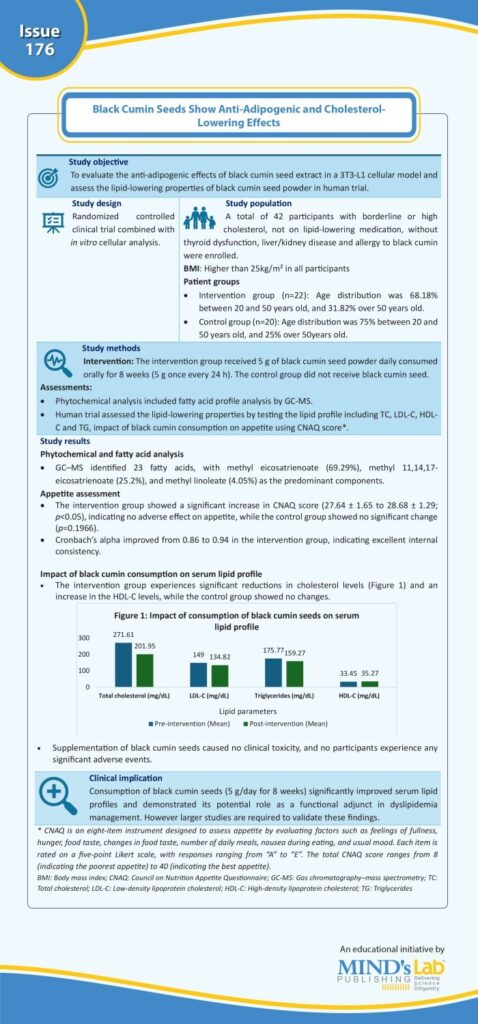
Source: Ahmed S, Ali MS, Nishigaki Y, Das R, Shiblu SA, Akter S, Matsui-Yuasa I, Kojima-Yuasa A. Black cumin seed (Nigella sativa) confers anti-adipogenic effects in 3T3-L1 cellular model and lipid-lowering properties in human subjects. Food Sci Nutr. 2025;13(9):e70888. Doi: 10.1002/fsn3.70888.