


Artificial light exposure at night has become increasingly common with the widespread use of indoor lighting and electronic devices. It is now evident that, beyond its effects on sleep, night-time light exposure may also negatively influence the cardiovascular health by disrupting circadian rhythms.
Previous studies have associated greater night-time light exposure with adverse cardiometabolic profiles, including elevated blood pressure, dyslipidemia, inflammation, and increased cardiovascular disease (CVD) risk. However, whether exposure to light at night is associated with structural and functional changes in the heart has remained unclear. Cardiac remodelling and subclinical dysfunction may precede clinically apparent cardiovascular disease, making them important markers of early cardiac injury.
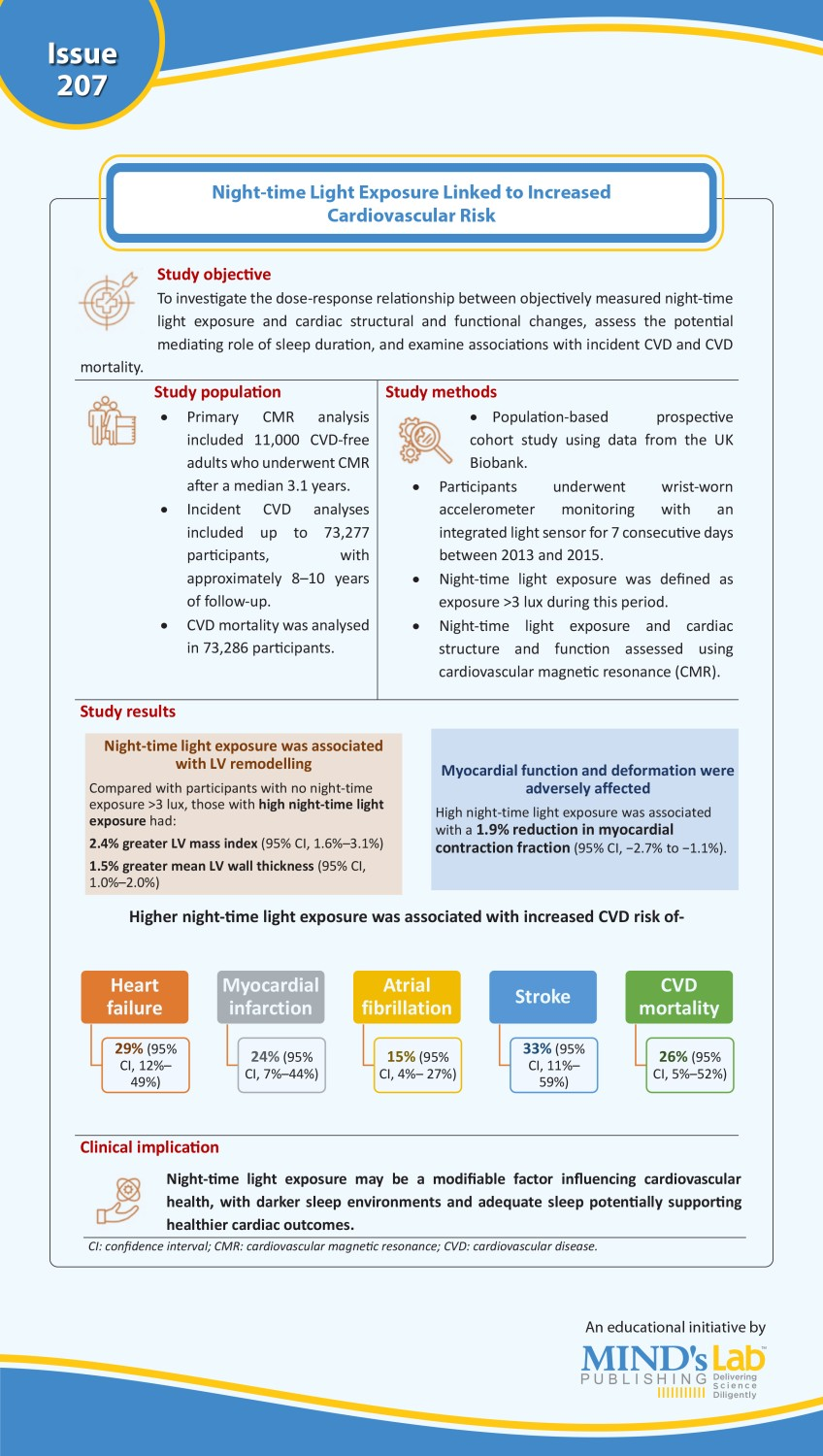
A recent population-based cohort study published in the European Heart Journal investigated the association between objectively measured night-time light exposure and cardiac structure and function assessed using cardiovascular magnetic resonance (CMR). The study also examined whether sleep duration mediated these associations and evaluated the relationship between nighttime light exposure and subsequent cardiovascular outcomes. Greater nighttime light exposure was associated with adverse cardiac remodelling and subclinical cardiac dysfunction. It was also linked to higher risks of heart failure, atrial fibrillation, myocardial infarction, stroke, and CVD mortality.
References: 1. Dai J, Dai W, Heianza Y, Qi L. Nighttime light exposure and cardiac structure and function. Eur Heart J. 2026. doi:10.1093/eurheartj/ehag563.